
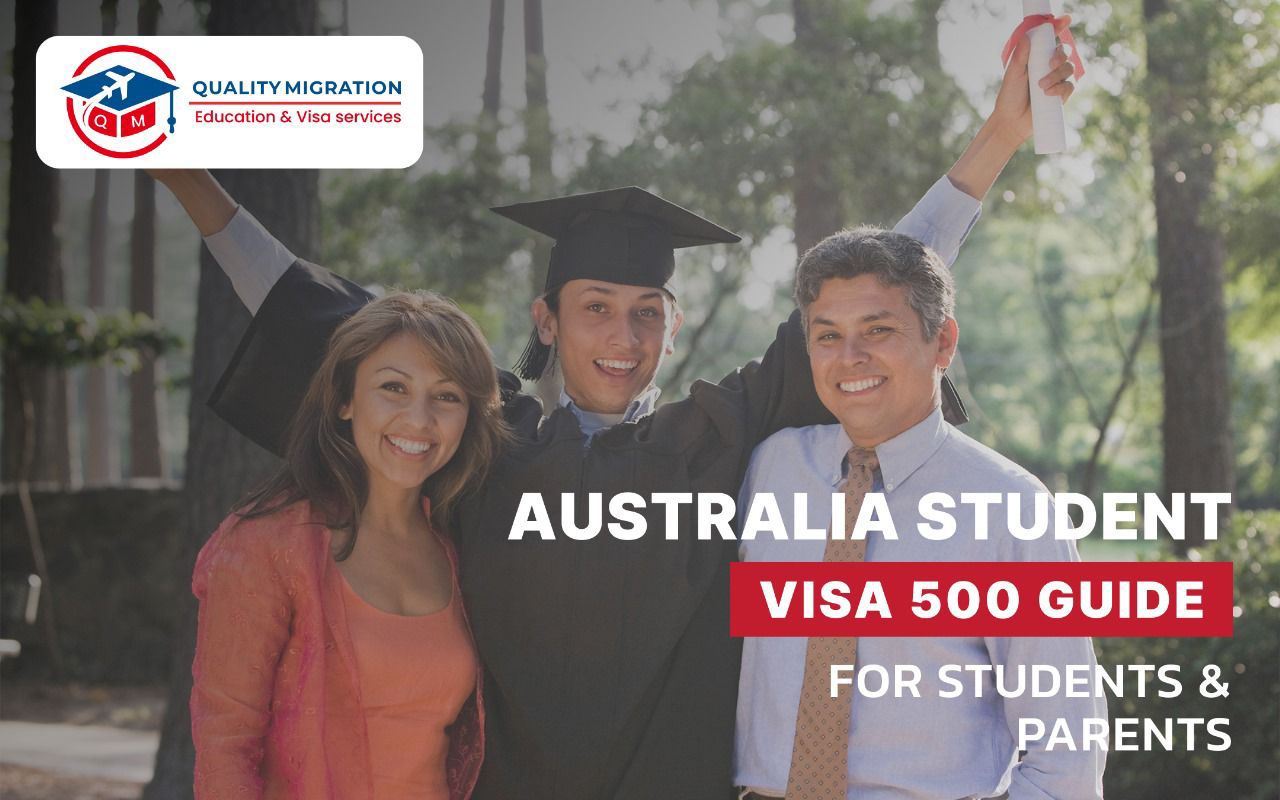
Australia remains one of the most sought-after study destinations in the world, known for its high-quality education system, multicultural environment, and student-friendly policies. If you are planning to pursue higher education in Australia—or supporting your child’s academic goals—understanding the Student Visa Subclass 500 is essential.
This comprehensive 2025 guide explains the student visa application process, eligibility requirements, recent policy changes, and how professional guidance from Quality Migration can help make your journey smoother.
What Is the Australia Student Visa Subclass 500?
The Student Visa Subclass 500 allows international students to live and study in Australia while enrolled in a full-time course with a CRICOS-registered education provider. Depending on the course length, students may stay in Australia for up to five years.
This visa also permits part-time work of up to 48 hours per fortnight during study periods and unlimited hours during scheduled course breaks.
The Subclass 500 visa applies to a wide range of programs, including:
- Higher education (universities)
- Vocational Education and Training (VET)
- English Language Intensive Courses for Overseas Students (ELICOS)
- School-level education
Eligible dependants, including partners and children, may accompany the primary student under specific conditions.
Latest Student Visa Updates in 2025
In 2025, the Australian Department of Home Affairs introduced significant reforms to strengthen the integrity of the student visa system and ensure that only genuine students apply.
Increased Visa Application Fees
From 1 July 2025, the base application fee for the Student Visa Subclass 500 increased from AUD 1,600 to AUD 2,000.
- Adult dependants: AUD 1,225
- Child dependants: AUD 400
Applicants should carefully consider these costs when planning their education budget.
Offshore-Only Student Visa Applications
One of the most significant policy changes in 2025 is the requirement that all new student visa applications must be lodged offshore. Onshore applications and extensions are no longer permitted.
Students currently in Australia on other visa types must return to their home country before applying for a student visa.
Mandatory Confirmation of Enrolment (CoE)
A valid Confirmation of Enrolment (CoE) is now compulsory at the time of visa lodgement. Offer letters or conditional admission letters are no longer accepted.
The CoE confirms enrolment in a full-time CRICOS-approved course and is issued after accepting an offer and paying the required tuition deposit.
Annual Student Intake Caps
To manage migration levels, the Australian Government introduced an annual cap of approximately 270,000 student enrolments.
- 145,000 places for universities
- 95,000 places for vocational education and training (VET)
Due to these limits, students are strongly encouraged to apply early to secure their place.
Stricter Financial and English Language Requirements
Applicants must now demonstrate increased financial capacity. The required annual living cost threshold has risen to approximately AUD 29,710, in addition to tuition fees and travel expenses.
English language requirements have also been tightened. Most applicants must achieve:
- IELTS 6.0 overall
- No band lower than 5.5
Equivalent scores from PTE Academic, TOEFL iBT, or Cambridge English may be accepted, depending on the education provider.
Eligibility Criteria for Student Visa Subclass 500
To qualify for a student visa in Australia, applicants must meet the following requirements:
- Enrollment in a CRICOS-registered full-time course with a valid CoE
- Genuine intention to study temporarily in Australia
- Sufficient financial evidence
- English language proficiency
- Overseas Student Health Cover (OSHC) for the entire stay
- Health examinations and character clearances
Step-by-Step Student Visa Application Process
- Choose a CRICOS-approved course and institution
- Apply and receive your Confirmation of Enrolment (CoE)
- Prepare required documents, including financial and health evidence
- Lodge your visa application online
- Attend biometrics and medical appointments if required
- Wait for visa processing (average offshore processing is around 29 days)
- Receive your visa decision and travel instructions
Why Work With a Migration Agent or Education Consultant?
Student visa applications involve detailed documentation and strict compliance. Even small errors can lead to delays or refusal.
Working with a registered migration agent ensures your application is accurate, complete, and aligned with the latest policy updates.
At Quality Migration, we support students and families at every stage—from course selection to visa approval—giving you a strong advantage in a competitive environment.
A professional migration advisor can:
- Help select the right education pathway
- Prepare genuine student statements and financial documents
- Liaise with education providers for CoE issuance
- Guide you through the online application process
- Advise on dependants, OSHC, and visa conditions
- Communicate with the Department of Home Affairs on your behalf
Support for Parents
Parents play an important role in overseas education planning. Key considerations include:
- Institution reputation and rankings
- Student accommodation and campus safety
- Part-time work opportunities
- Understanding visa conditions and compliance
For students under 18, guardian arrangements and welfare requirements may also apply.
Our consultants at Quality Migration assist parents in understanding these obligations and ensuring all documentation is prepared correctly.
Ready to Study in Australia?
With increased competition and stricter regulations in 2025, expert guidance can make a significant difference. Whether you are starting your application or finalising documents, our experienced migration agents are here to help.
Contact Quality Migration today for a free student visa consultation and take the first step toward achieving your Australian education goals with confidence.